
Access export import port database with shipment data, port-wise insights, and trade analytics to optimize logistics and grow your business.
Contact Us To Get Free Sample Database
Analyse the sample format before purchasing the database
Introduction
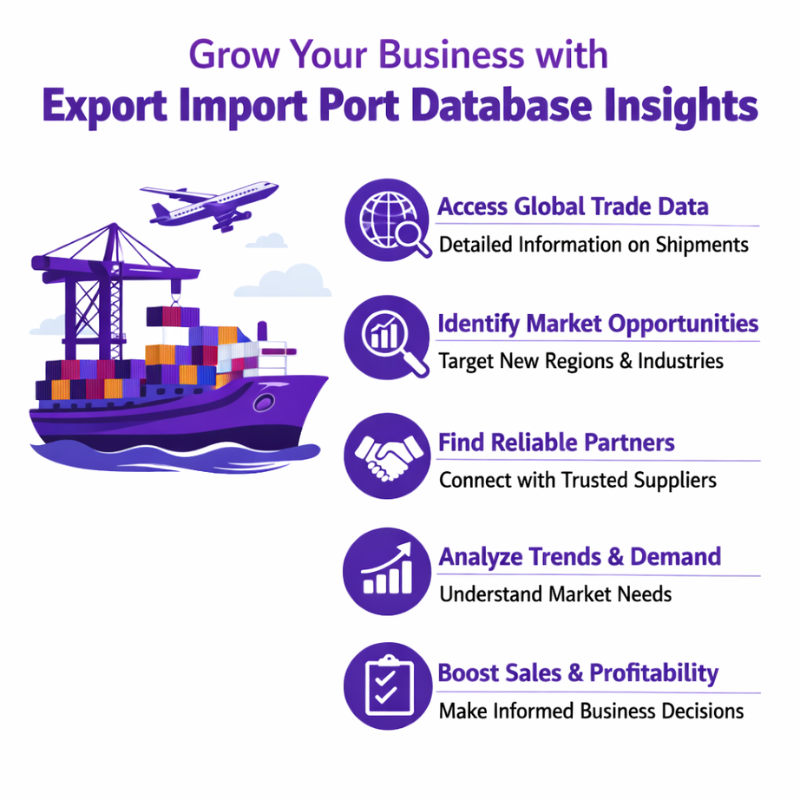
An Export Import Port Database is a specialized trade intelligence solution that provides detailed insights into shipment activities across global ports. In today’s fast-paced international trade environment, businesses need more than just general trade data—they require granular, port-level information to understand how goods move, where demand exists, and which logistics routes are most efficient.
Contact Us To Get Free Sample Database
Analyse the sample format before purchasing the database
This database includes comprehensive details such as port names, shipment records, HS codes, product descriptions, quantities, pricing, importer-exporter profiles, and shipping routes. With this information, businesses can analyze trade patterns, identify high-volume ports, and optimize supply chain strategies.
Our Export Import Port Database services are designed to deliver accurate, structured, and actionable insights that help businesses gain a competitive advantage. Whether you are an exporter targeting specific ports, a logistics provider optimizing routes, or a trader analyzing market demand, our database empowers you to make data-driven decisions and expand globally with confidence.
Why Export Import Port Database is Important
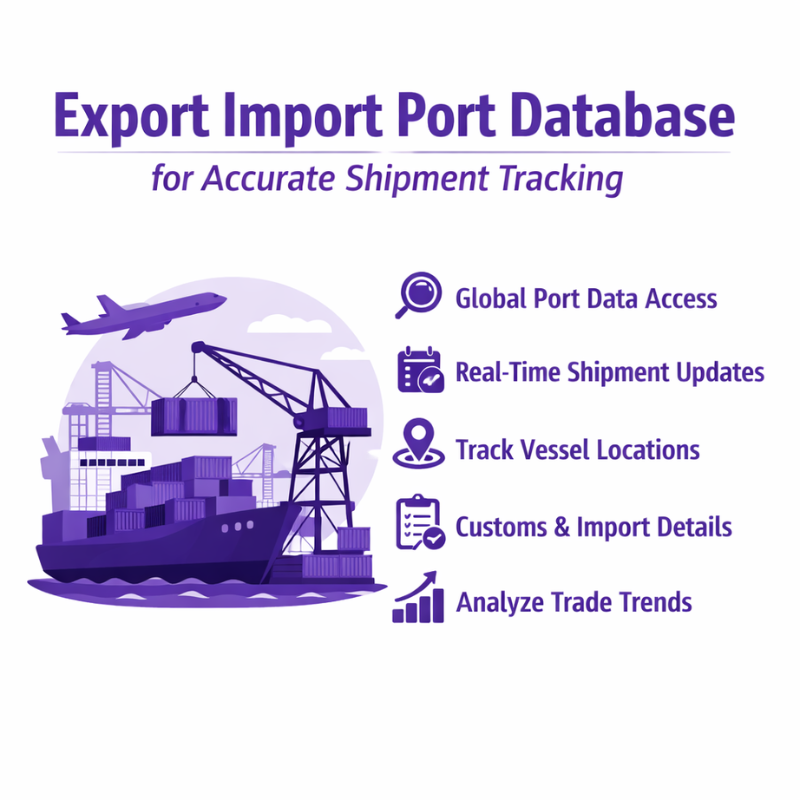
Understanding trade at the port level offers a deeper layer of intelligence that general trade data cannot provide. An Export Import Port Database is essential because it enables:
- Port-Level Market Insights – Identify high-demand ports for specific products
- Efficient Logistics Planning – Optimize shipping routes and reduce transportation costs
- Supply Chain Visibility – Track product movement across different ports
- Competitor Monitoring – Analyze competitor shipping patterns and preferred ports
- Trade Flow Analysis – Understand how goods move between countries and regions
- Business Expansion Opportunities – Discover untapped markets and ports
With detailed port insights, businesses can improve efficiency, reduce risks, and make smarter strategic decisions.
Types of Export Import Port Database Solutions
We offer a wide range of Export Import Port Database solutions tailored to different business needs:
- Global Port Database
Comprehensive data covering ports worldwide with detailed shipment insights. - Country-Specific Port Database
Focused datasets for specific countries, including major and minor ports. - Port-Wise Import Export Database
Detailed analysis of trade activities at individual ports. - Product-Based Port Database
Insights into which ports handle specific products using HS code segmentation. - Shipping Route & Logistics Database
Track shipping routes, transit points, and logistics patterns. - Custom Port Database Solutions
Tailored datasets based on industry, product, or geographic requirements. - Real-Time Port Database Integration
API-based solutions for live shipment tracking and automation.
Key Features of Our Export Import Port Database Services
Our solutions are designed to deliver reliable data and actionable insights:
- Comprehensive Shipment Data – Includes product details, HS codes, quantities, and values
- Port-Level Intelligence – Analyze trade activity at specific ports
- Verified Importer & Exporter Profiles – Reliable company information
- Advanced Filtering & Search Options – Filter by port, product, company, or time period
- Real-Time Data Updates – Access the latest shipment movements
- Trade Flow Visualization – Understand global trade routes and patterns
- Competitor Intelligence Tools – Monitor competitor strategies and shipments
- Secure Data Infrastructure – Strong data protection and compliance standards
- Custom Dashboards & Reports – Visual analytics for better decision-making
Development Process
We follow a structured and transparent approach to deliver high-quality solutions:
- Requirement Analysis & Strategy Planning
Understanding your business goals, target markets, and logistics requirements. - Data Collection & Aggregation
Gathering port-level trade data from reliable sources and customs records. - Data Cleaning & Structuring
Standardizing and validating data to ensure consistency and accuracy. - Database Development & Integration
Building scalable systems and integrating with your existing tools. - Quality Assurance & Validation
Ensuring data accuracy, completeness, and compliance with regulations. - Deployment & Access Setup
Delivering data through dashboards, APIs, or downloadable formats. - Ongoing Maintenance & Updates
Continuous updates and optimization for long-term reliability.
Technology Stack
We use modern technologies to build scalable and efficient database solutions:
- Database Technologies: MySQL, PostgreSQL, MongoDB, BigQuery
- Backend Technologies: Node.js, Python, PHP
- Data Processing: ETL pipelines, Apache Spark, data scraping tools
- Cloud Platforms: AWS, Google Cloud, Microsoft Azure
- Analytics Tools: Power BI, Tableau, custom BI dashboards
- APIs & Integration: REST APIs, GraphQL
- Security: Data encryption, secure APIs, role-based access control
Cost Factors in Export Import Port Database Services
The cost of Export Import Port Database services depends on multiple factors:
- Data coverage (global vs country-specific ports)
- Data accuracy and validation level
- Customization and segmentation requirements
- Real-time vs static data access
- Integration with CRM, ERP, or analytics platforms
- Advanced reporting and dashboard features
- Maintenance and support services
We offer flexible pricing models to suit businesses of all sizes, from startups to large enterprises.
Latest Trends in Export Import Port Database
The industry is evolving rapidly with advancements in technology and data analytics:
- AI-Driven Trade Analytics – Predict shipping trends and identify opportunities
- Real-Time Shipment Tracking – Monitor goods movement across ports instantly
- Cloud-Based Data Platforms – Scalable and accessible infrastructure
- Advanced Data Visualization – Interactive dashboards for deeper insights
- API-Based Integration – Seamless connectivity with business systems
- Predictive Logistics Planning – Optimize supply chain and reduce delays
- Automation in Data Processing – Improve speed and accuracy of data handling
- Enhanced Data Security – Strong compliance with global standards
Why Choose Us for Export Import Port Database?
Choosing the right data provider can significantly impact your trade success. Here’s why businesses trust us:
- Accurate & Verified Data – High-quality datasets from trusted sources
- Global Port Coverage – Access data from major and minor ports worldwide
- Custom Data Solutions – Tailored to your business goals and requirements
- Advanced Analytics Expertise – Turn data into actionable insights
- Scalable Infrastructure – Designed to support business growth
- Secure & Compliant Systems – Strong data protection and compliance standards
- Fast Delivery & Dedicated Support – Quick turnaround with ongoing assistance
- Integration-Ready Solutions – Easily connect with CRM, ERP, and analytics tools
We help you transform port-level trade data into a strategic asset that drives efficiency, improves logistics, and accelerates business growth.
Ready to gain insights from a powerful Export Import Port Database?
Let’s help you optimize your logistics and expand your global trade reach.
Contact us today for a free consultation and customized solution.
Frequently Asked Questions
An Export Import Port Database is a structured dataset containing shipment information at the port level, including product details, companies, and trade values.
Importers, exporters, logistics companies, freight forwarders, and market analysts can benefit from these services.
It includes port names, shipment records, HS codes, product descriptions, quantities, values, and importer-exporter details.
Yes, the data is validated and structured to ensure high accuracy and reliability.
Yes, we provide tailored datasets based on ports, products, industries, and regions.
Yes, it can be integrated with CRM, ERP, and analytics tools through APIs.
Data updates depend on the plan, ranging from periodic updates to real-time access.


