

Learn how to get manufacturer sales data using GST insights, analytics tools, and market research to improve pricing and business strategy.
Contact Us To Get Free Sample Database
Analyse the sample format before purchasing the database
Introduction
In today’s competitive business landscape, access to accurate and timely data is essential for making informed decisions. One of the most valuable data sources for businesses involved in distribution, wholesale, or retail is manufacturer sales data. This data provides insights into production trends, product demand, pricing strategies, and distribution networks.
If you are searching for how to get manufacturer sales data, the process involves leveraging multiple sources such as GST databases, distributor networks, market research reports, financial disclosures, and advanced analytics platforms. These sources help businesses gather structured and actionable data that can be used to gain a competitive edge.
Contact Us To Get Free Sample Database
Analyse the sample format before purchasing the database
Manufacturer sales data allows organizations to understand which products are performing well, identify high-demand markets, and optimize supply chain strategies. Whether you are a distributor, supplier, or competitor, having access to this data helps in better forecasting, pricing decisions, and strategic planning.
In this guide, we’ll explore how to obtain manufacturer sales data, its importance, available solutions, key features, and how businesses can use it effectively to drive growth.
Why Manufacturer Sales Data is Important
Manufacturer sales data plays a critical role in improving business efficiency and competitiveness.
Here’s why this service is essential:
- Market Demand Analysis – Understand which products are in high demand
- Pricing Strategy Optimization – Analyze manufacturer pricing trends
- Supply Chain Visibility – Track product flow from manufacturers to distributors
- Competitive Benchmarking – Compare your performance with competitors
- Inventory Planning – Align stock levels with market demand
- Business Growth Strategy – Identify new opportunities and market gaps
Without accurate manufacturer data, businesses may struggle with inefficient inventory management and missed opportunities.
Types of Solutions for Manufacturer Sales Data
There are multiple methods to access and analyze sales data depending on your needs.
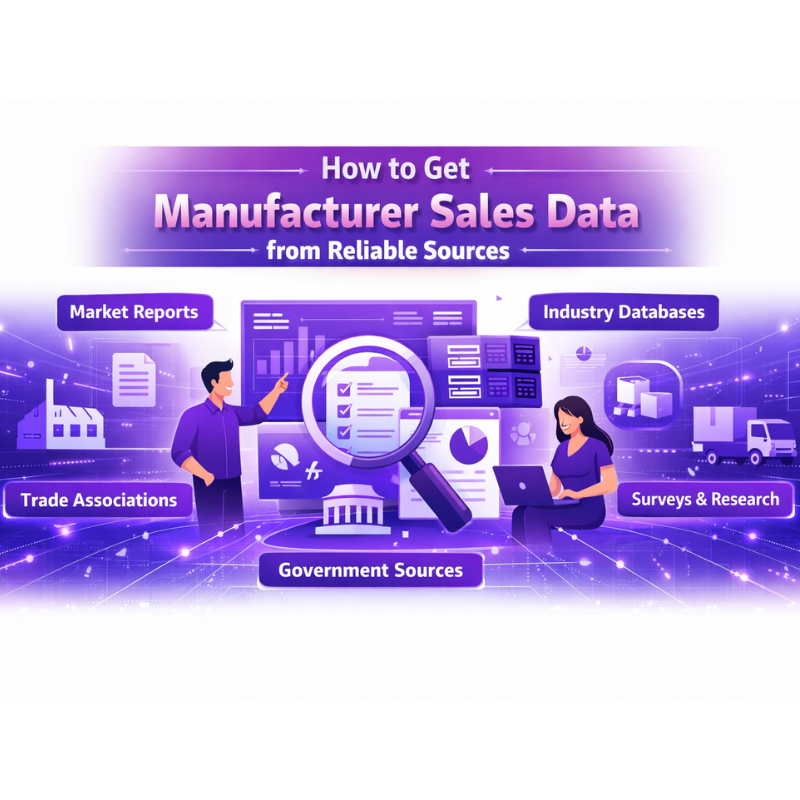
- GST Data Platforms
Access structured sales data derived from GST filings and transaction records. - Distributor and Dealer Networks
Collect insights from distributors who handle manufacturer products. - Market Research Reports
Use industry reports to analyze manufacturer performance and trends. - Financial Statements and Public Reports
Analyze revenue and sales performance from company disclosures. - E-commerce and Retail Data Analysis
Track product performance on online and offline retail platforms. - Third-Party Data Providers
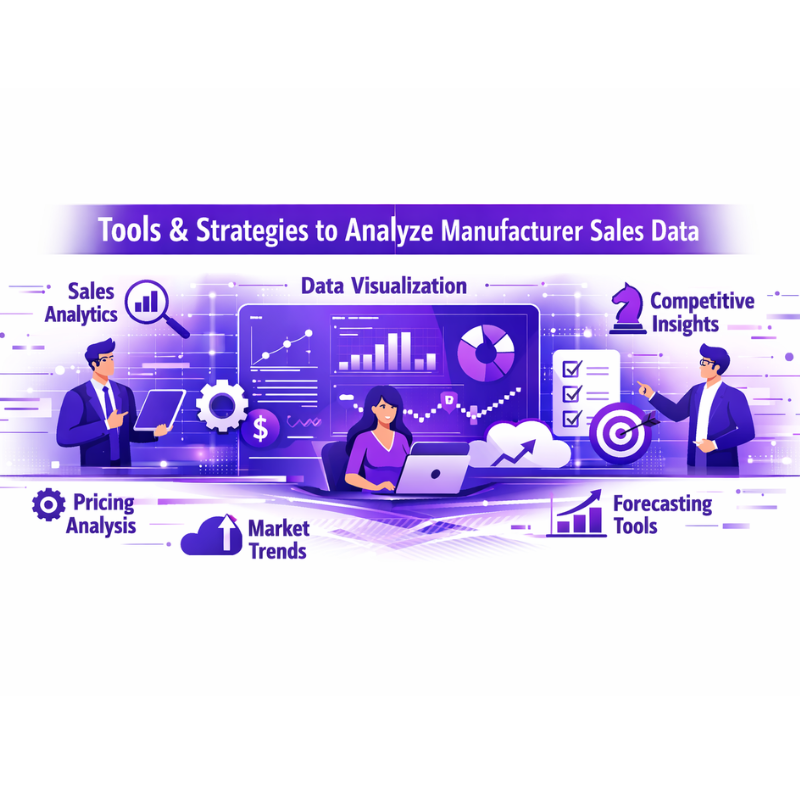
Use specialized platforms that aggregate manufacturer sales data. - Analytics and BI Tools
Process large datasets and generate actionable insights.
Each solution provides a unique perspective and can be combined for comprehensive analysis.
Key Features
Advanced data solutions provide powerful features to extract valuable insights.
- Detailed sales transaction data by product and region
- GST-based verified datasets for accuracy
- Product-level performance analysis
- Distribution and channel insights
- Trend analysis and forecasting tools
- Custom dashboards and reporting features
- Real-time or near real-time data access
- Integration with ERP and CRM systems
These features help businesses turn raw data into strategic decisions.
Development Process for Manufacturer Sales Data Analysis
A structured approach ensures accurate data collection and meaningful insights.
- Requirement Analysis
Define objectives such as demand forecasting or competitor tracking. - Data Source Identification
Select reliable sources like GST databases and data providers. - Data Collection
Gather data from multiple channels including distributors and platforms. - Data Cleaning and Structuring
Organize data to ensure accuracy and consistency. - Data Integration
Combine data into a centralized system. - Analytics and Visualization
Use BI tools to identify patterns and trends. - Insight Implementation
Apply findings to pricing, procurement, and sales strategies. - Continuous Monitoring
Regularly update and analyze data for ongoing improvements.
Technology Stack
Modern data solutions rely on advanced technologies for performance and scalability.
Data Sources: GST databases, financial reports, distributor data
Backend Technologies: Python, Node.js, Java
Frontend Technologies: React.js, Angular, JavaScript
Databases: PostgreSQL, MySQL, MongoDB
Cloud Platforms: AWS, Google Cloud Platform, Microsoft Azure
Analytics Tools: Power BI, Tableau, Looker
Data Processing: AI/ML models, big data frameworks
Security Tools: SSL encryption, OAuth 2.0, role-based access control
A strong tech stack ensures reliable and secure data processing.
Cost Factors for Manufacturer Sales Data Solutions
The cost of accessing sales data depends on several factors.
- Data volume and depth required
- Number of manufacturers analyzed
- Subscription costs for data providers
- Custom reporting and analytics requirements
- Integration with existing systems
- Cloud infrastructure and storage costs
- Ongoing maintenance and updates
Investing in quality data solutions can lead to better ROI through improved decision-making.
Latest Trends in Manufacturer Sales Data
The use of sales data in manufacturing is evolving with new technologies.
- Adoption of AI and machine learning for predictive insights
- Growth of real-time GST-based data platforms
- Integration of cloud-based analytics systems
- Use of big data for large-scale analysis
- Automated data collection and reporting
- Advanced data visualization dashboards
- Increased use of data-as-a-service (DaaS)
- Integration with supply chain and ERP systems
These trends are helping businesses gain deeper insights into manufacturer performance.
Why Choose Us for Manufacturer Sales Data Solutions
Choosing the right partner ensures you get accurate insights and measurable results.
Here’s why businesses trust us:
- Accurate and Verified Data – Reliable GST-based and aggregated data sources
- Advanced Analytics Capabilities – Turn raw data into actionable insights
- Customized Reporting – Tailored solutions for your business needs
- Real-Time Data Access – Stay updated with the latest market trends
- Scalable Solutions – Suitable for startups and enterprises
- Secure Data Handling – Strong compliance and data protection standards
- Expert Support Team – Guidance from experienced professionals
- End-to-End Services – From data collection to strategy implementation
We help businesses unlock the full potential of manufacturer sales data to drive growth and efficiency.
Want to gain deeper insights into manufacturer performance?
Let us help you access and analyze manufacturer sales data effectively.
Contact us today for a free consultation and customized solution.
Frequently Asked Questions
You can obtain it through GST data platforms, distributor networks, market research reports, and third-party data providers.
It includes information about product sales, distribution channels, pricing, and demand trends.
Yes, when sourced from authorized and compliant data providers, it is legal for analysis purposes.
Distributors, wholesalers, retailers, and market analysts can use this data effectively.
Yes, it helps businesses align inventory with demand trends.
Tools like Power BI, Tableau, and AI-based analytics platforms are commonly used.


