

Learn how to get sales data of companies using reliable tools, GST insights, and analytics to improve business strategy and decision-making.
Contact Us To Get Free Sample Database
Analyse the sample format before purchasing the database
Introduction
In today’s data-driven business environment, understanding how to get sales data of companies is essential for gaining a competitive advantage. Sales data provides deep insights into a company’s performance, customer behavior, pricing strategies, and market positioning. Whether you are a startup, SME, or enterprise, having access to accurate sales data allows you to make informed decisions and stay ahead of competitors.
Contact Us To Get Free Sample Database
Analyse the sample format before purchasing the database
Companies use sales data to identify trends, forecast demand, optimize pricing, and improve customer targeting. However, obtaining this data—especially for competitors—requires the right combination of tools, legal data sources, and analytics platforms. From GST databases and public financial records to advanced data intelligence tools, businesses today have multiple ways to access and analyze sales information.
In this comprehensive guide, we’ll explore how to get sales data of companies, the importance of such data, available solutions, key features, and how you can leverage it to drive growth and profitability.
Why Getting Sales Data of Companies Service is Important
Access to sales data is no longer optional—it’s a necessity for businesses aiming to grow strategically.
Here’s why it matters:
- Market Intelligence – Understand competitor performance and market demand
- Better Decision-Making – Make data-backed strategic decisions
- Pricing Optimization – Analyze competitor pricing and adjust accordingly
- Customer Insights – Identify buying patterns and preferences
- Revenue Forecasting – Predict future sales trends with accuracy
- Competitive Benchmarking – Compare your performance against industry players
- Risk Reduction – Avoid poor investments using real sales data
Businesses that leverage sales data effectively can respond faster to market changes and outperform competitors.
Types of Solutions for How to Get Sales Data of Companies
There are multiple ways to access company sales data depending on your goals and industry.
Types of Solutions for How to Get Sales Data of Companies
Different methods and solutions are available to access company sales data depending on your business needs.
- Public Financial Records – Access sales data from annual reports, balance sheets, and government filings of companies
- GST and Tax Data Platforms – Use GST-based data sources to track sales transactions, invoice data, and tax filings
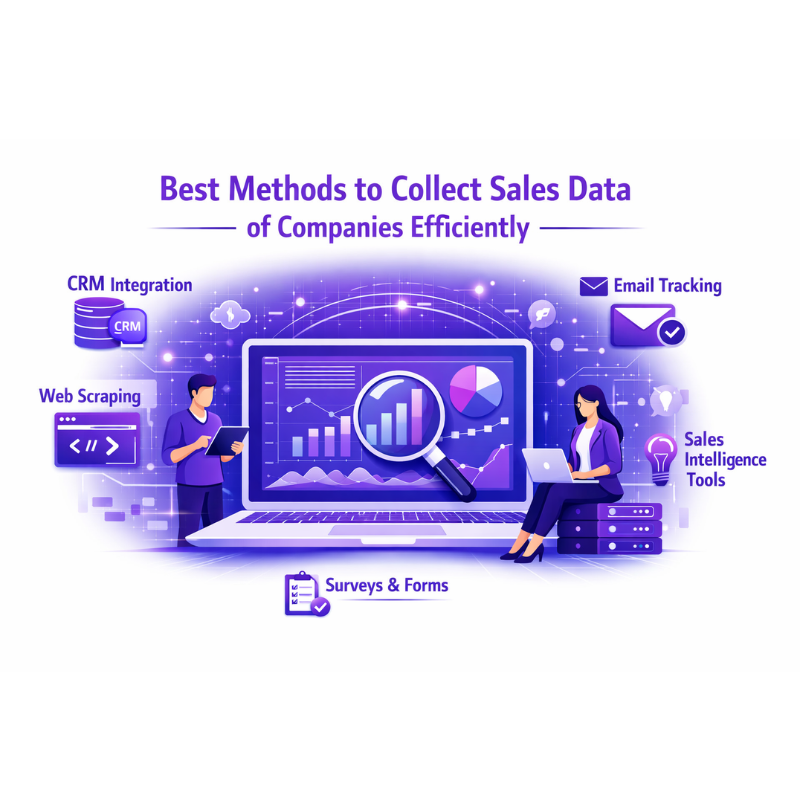
- Third-Party Data Providers – Subscribe to business intelligence platforms that offer aggregated and structured sales data
- Market Research Reports – Leverage industry reports to understand market trends, competitor performance, and sales benchmarks
- CRM and Internal Data Systems – Analyze your own customer and sales pipeline data to gain insights into performance
- Web Scraping and Digital Tools – Use automated tools to collect sales-related data from e-commerce platforms and online sources
Each solution offers varying levels of accuracy, cost, and depth, so businesses often combine multiple sources for the best results.
Key Features of Sales Data Solutions
High-quality sales data solutions provide actionable insights that go beyond basic numbers.
- Detailed transaction data including product, quantity, and value
- Real-time or near real-time data updates
- Customer segmentation and behavioral insights
- Competitor sales tracking and benchmarking
- Data visualization dashboards for easy interpretation
- Forecasting tools powered by AI and machine learning
- Custom filters for targeted analysis
- Integration with business intelligence tools
- Exportable reports for strategic planning
These features help businesses transform raw data into meaningful strategies.
Development Process for Sales Data Analysis Solutions
A structured approach ensures accurate and effective sales data collection and analysis.
- Requirement Analysis – Define objectives, target companies, and data needs
- Data Source Identification – Select reliable and legal data providers
- Data Collection – Gather sales data from multiple sources
- Data Cleaning – Remove inconsistencies and duplicates
- Data Structuring – Organize data into usable formats
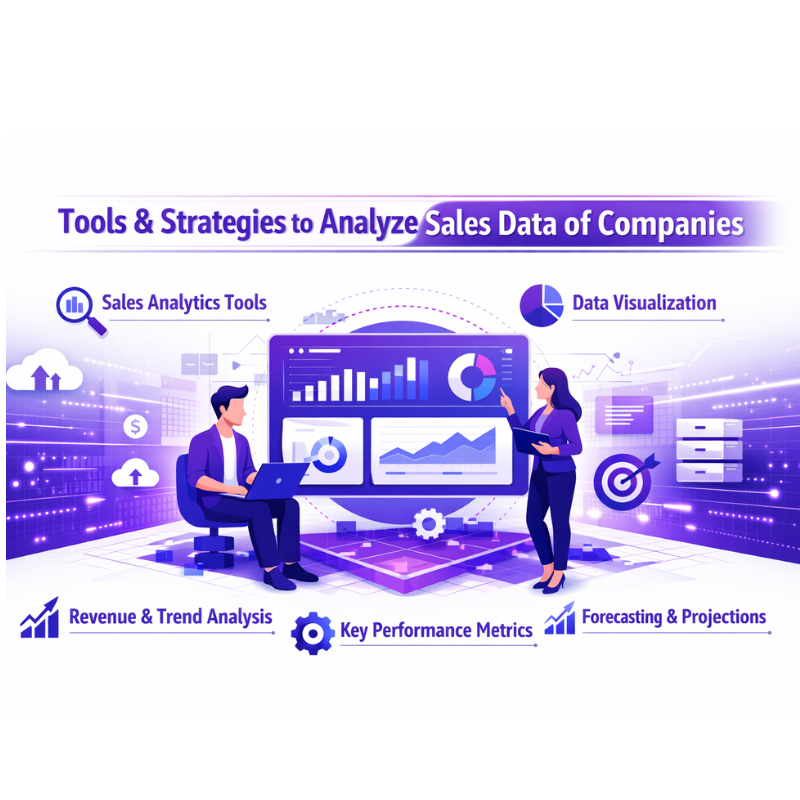
- Data Analysis – Identify trends, patterns, and insights
- Report Generation – Create dashboards and reports
- Implementation – Apply insights to business strategies
- Continuous Monitoring – Update and track performance regularly
This process ensures accuracy, reliability, and actionable insights.
Technology Stack for Sales Data Solutions
Modern sales data platforms rely on advanced technologies for scalability and performance.
- Data Sources: GST databases, APIs, public datasets
- Backend Technologies: Python, Node.js, Java
- Frontend Technologies: React.js, Angular, JavaScript
- Databases: MySQL, PostgreSQL, MongoDB
- Cloud Platforms: AWS, Google Cloud, Microsoft Azure
- Analytics Tools: Power BI, Tableau, Looker
- AI/ML Tools: Predictive analytics, data mining algorithms
- Security: Encryption, authentication protocols, compliance frameworks
A robust tech stack ensures secure, fast, and scalable data processing.
Cost Factors for How to Get Sales Data of Companies
The cost of accessing sales data varies depending on several factors:
- Type and depth of data required
- Number of companies being analyzed
- Subscription fees for data providers
- Customization and reporting needs
- Integration with existing systems
- Advanced analytics and AI features
- Frequency of data updates
While costs may vary, the ROI from accurate sales data insights can be substantial.
Latest Trends in Sales Data Analysis
Sales data analysis is evolving rapidly with new technologies and methodologies.
- AI-driven predictive analytics for accurate forecasting
- Real-time data access and dashboards
- Growth of Data-as-a-Service (DaaS) platforms
- Integration with CRM and ERP systems
- Automated competitor tracking tools
- Big data analytics for large datasets
- Cloud-based scalable data platforms
- Enhanced data visualization techniques
These trends are helping businesses gain faster and deeper insights.
Why Choose Us for How to Get Sales Data of Companies
Choosing the right partner is crucial for extracting maximum value from sales data.
Here’s why businesses trust us:
- Accurate Data Sources – Verified and reliable sales data insights
- Advanced Analytics – Turn raw data into actionable intelligence
- Customized Solutions – Tailored to your industry and goals
- Real-Time Insights – Stay ahead with up-to-date information
- Scalable Services – Suitable for businesses of all sizes
- Secure Data Handling – Compliance with data privacy standards
- Expert Support – Dedicated professionals for guidance
- End-to-End Service – From data collection to strategy execution
We help you unlock powerful insights to drive smarter decisions and business growth.
Ready to unlock powerful insights from company sales data?
Let us help you access accurate and actionable sales intelligence.
Contact us today for a customized solution and free consultation.
Frequently Asked Questions
Yes, the GST portal allows users to download return data in Excel or JSON format, which can then be converted into other formats for analysis.
Yes. Many tools and services allow automated extraction of GST data using APIs or automation scripts, reducing manual effort.
GST data extraction is useful for business owners, accountants, tax consultants, financial analysts, and enterprises that need accurate GST reports.
Most businesses extract GST data monthly or quarterly to reconcile invoices, analyze taxes, and ensure compliance.
Yes, when done through authorized tools or secure systems that follow GST authentication and data protection guidelines.


