
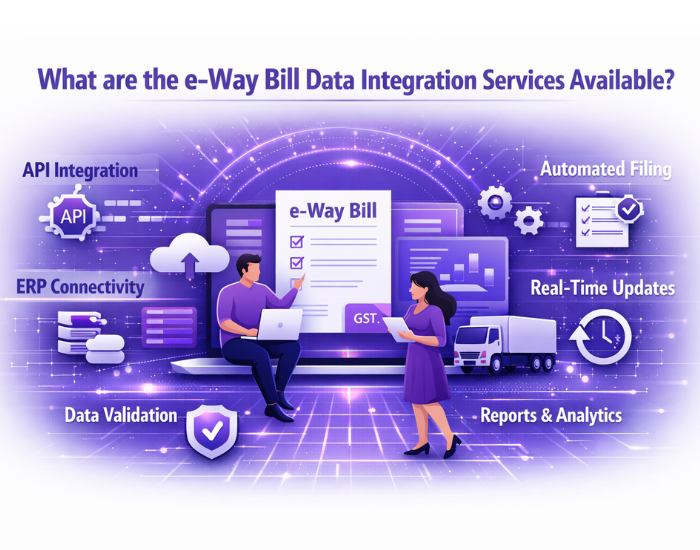
Discover e-way bill data integration services available to automate GST compliance, streamline logistics, and improve business efficiency.
Contact Us To Get Free Sample Database
Analyse the sample format before purchasing the database
Introduction
In today’s rapidly evolving logistics and supply chain ecosystem, businesses must ensure seamless compliance with GST regulations while maintaining operational efficiency. Understanding what are the e-way bill data integration services available is essential for organizations handling frequent movement of goods. E-way bill integration services help automate the generation, validation, and tracking of e-way bills by connecting business systems directly with the GST portal.
Contact Us To Get Free Sample Database
Analyse the sample format before purchasing the database
Manual e-way bill generation can lead to errors, delays, and compliance risks. Integration services eliminate these challenges by enabling real-time data exchange between ERP systems, accounting software, and GST platforms. This ensures accurate documentation, faster processing, and improved visibility across the supply chain.
Businesses such as manufacturers, distributors, transporters, and retailers benefit significantly from integrated e-way bill solutions. These services not only reduce manual effort but also enhance compliance, streamline logistics operations, and provide actionable insights. In this guide, we’ll explore the different types of e-way bill data integration services available, their features, benefits, and how they can transform your business processes.
Why E-Way Bill Data Integration Services are Important
E-way bill data integration plays a critical role in ensuring efficient and compliant business operations.
- Automated GST Compliance – Ensures accurate and timely e-way bill generation as per regulations
- Reduced Manual Errors – Eliminates human errors in data entry and validation
- Faster Processing – Speeds up invoice-to-transportation workflows
- Real-Time Data Sync – Enables instant updates between systems and GST portal
- Improved Logistics Efficiency – Streamlines goods movement and tracking
- Centralized Data Management – Consolidates all e-way bill data in one system
- Audit Readiness – Maintains accurate records for compliance and audits
- Cost Optimization – Reduces operational costs through automation
Integration services help businesses achieve efficiency, accuracy, and compliance simultaneously.
Types of Solutions for E-Way Bill Data Integration Services
Various integration solutions are available depending on business size and operational complexity.
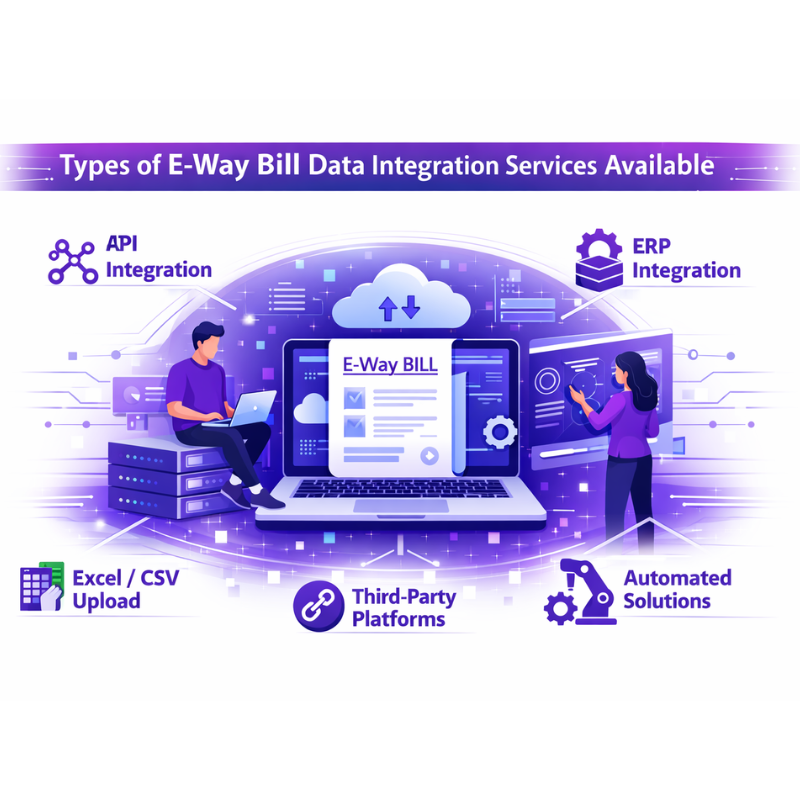
- API-Based Integration Services – Directly connect ERP or billing systems with the GST portal for automated e-way bill generation
- ERP Integration Solutions – Integrate e-way bill functionality into ERP platforms like SAP, Oracle, or custom systems
- Cloud-Based Integration Platforms – Offer scalable and remote access to e-way bill systems with real-time synchronization
- Middleware Integration Solutions – Use middleware to connect multiple systems and ensure seamless data exchange
- E-Invoicing and E-Way Bill Combined Integration – Integrate both invoicing and e-way bill processes into a single workflow
- Third-Party Integration Services – Use external providers for end-to-end integration, management, and support
- Mobile and Web-Based Integration Tools – Enable on-the-go access and management of e-way bill data
Selecting the right solution depends on your business processes, system architecture, and scalability requirements.
Key Features of E-Way Bill Data Integration Services
Modern integration services offer advanced features to enhance efficiency and control.
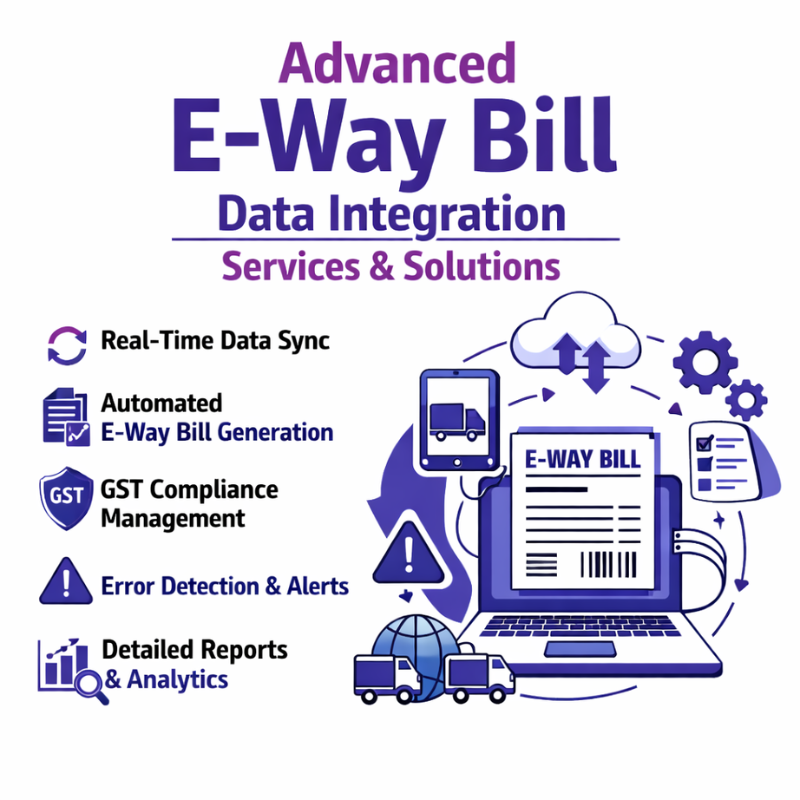
- Automated e-way bill generation and cancellation
- Real-time validation with GST portal
- Seamless ERP and accounting system integration
- Bulk generation and processing capabilities
- Auto-population of invoice and transport data
- Real-time tracking and status updates
- Centralized dashboards for monitoring and reporting
- Error handling and validation mechanisms
- Secure data transmission and storage
- Alerts and notifications for compliance deadlines
These features help businesses streamline operations and reduce compliance risks.
Development Process for E-Way Bill Integration Services
A structured implementation approach ensures smooth integration and performance.
- Requirement Analysis – Identify business needs, transaction volume, and integration scope
- System Assessment – Evaluate existing ERP, accounting, and logistics systems
- Solution Design – Define integration architecture and workflows
- API and System Integration – Connect systems with GST portal and other platforms
- Data Mapping and Validation – Ensure accurate data flow between systems
- Testing and Quality Assurance – Validate functionality and compliance
- Deployment and Training – Implement the solution and train users
- Monitoring and Optimization – Continuously monitor performance and improve efficiency
This process ensures a reliable and scalable integration setup.
Technology Stack for E-Way Bill Integration Solutions
Modern integration services rely on advanced technologies for performance and scalability.
- Backend Technologies: Java, Python, Node.js
- Frontend Technologies: React.js, Angular, JavaScript
- Integration Technologies: REST APIs, SOAP APIs, middleware platforms
- Databases: MySQL, PostgreSQL, MongoDB
- Cloud Platforms: AWS, Google Cloud, Microsoft Azure
- Security: SSL encryption, OAuth authentication, role-based access control
- Analytics Tools: Dashboards, reporting tools, data visualization
A strong technology stack ensures secure, scalable, and efficient integration.
Cost Factors for E-Way Bill Data Integration Services
The cost of integration services depends on several factors.
- Complexity of integration and system architecture
- Number of systems and users involved
- Type of solution (cloud, on-premise, or hybrid)
- Customization and feature requirements
- API usage and transaction volume
- Implementation and training costs
- Ongoing maintenance and support
Investing in integration services delivers long-term cost savings and operational efficiency.
Latest Trends in E-Way Bill Data Integration
E-way bill integration is evolving with advancements in technology.
- AI-driven automation for faster processing and validation
- Real-time data synchronization across multiple systems
- Integration with e-invoicing and GST return filing systems
- Cloud-based scalable platforms
- Mobile-first solutions for remote access
- Advanced analytics and reporting dashboards
- API-driven ecosystems for seamless connectivity
- Enhanced security and compliance frameworks
These trends are helping businesses achieve higher efficiency and accuracy.
Why Choose Us for E-Way Bill Data Integration Services
Choosing the right integration partner is crucial for success.
- Seamless Integration Expertise – Smooth connectivity with ERP, GST, and logistics systems
- Advanced Automation – Reduce manual effort and improve efficiency
- Customizable Solutions – Tailored integration based on your business needs
- Real-Time Data Sync – Instant updates and tracking capabilities
- Scalable Services – Suitable for businesses of all sizes
- Secure and Compliant – Adherence to GST regulations and data security standards
- Dedicated Support Team – Expert guidance and ongoing assistance
- End-to-End Implementation – From planning to deployment and optimization
We help businesses simplify compliance and enhance operational efficiency through smart integration.
Ready to streamline your e-way bill processes with seamless integration?
Let us help you automate compliance and improve logistics efficiency.
Contact us today for a customized integration solution and free consultation.
Frequently Asked Questions
These services connect your business systems with the GST portal to automate e-way bill generation and management.
It ensures compliance, reduces errors, and improves operational efficiency.
Yes, most solutions support integration with ERP and accounting systems.
Yes, it uses secure protocols like encryption and authentication for safe data transfer.
Manufacturers, transporters, distributors, and retailers handling goods movement should use it.
Costs vary based on complexity, features, and system requirements.
It depends on the complexity but typically ranges from a few days to a few weeks.


